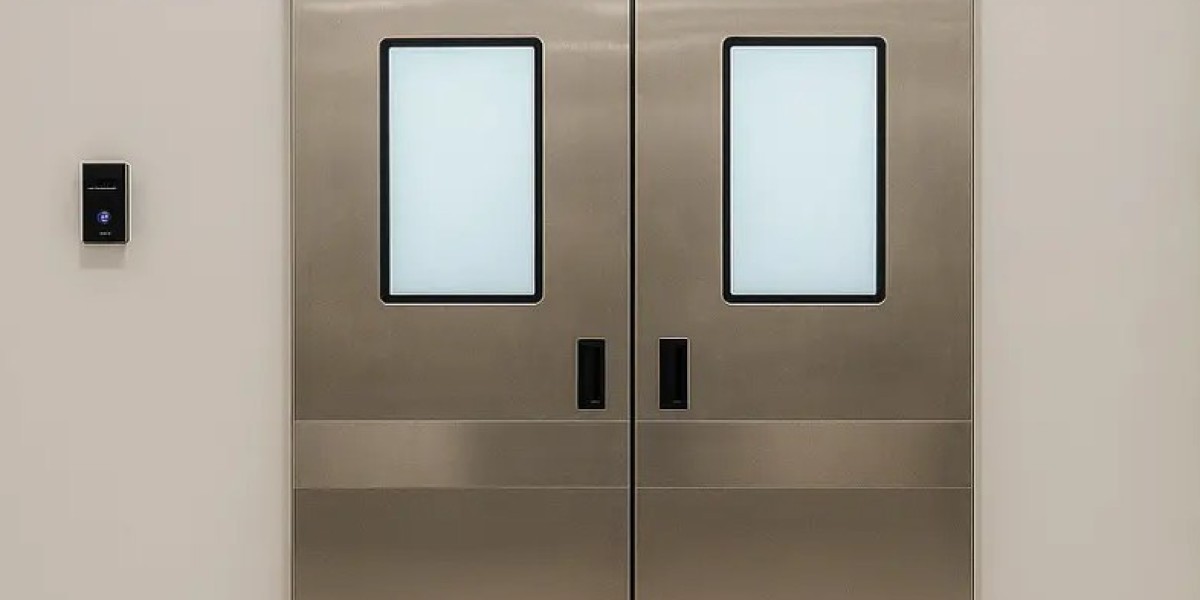

Steel Medical Doors play a key role in shaping the structure and safety of healthcare environments. Designed for demanding conditions, they provide controlled access between different hospital zones while supporting hygiene and operational efficiency.
The construction of Steel Medical Doors focuses on material strength. Steel offers resistance to impact and wear, making it suitable for areas with constant movement. In hospitals, doors are frequently used by staff, patients, and equipment transport systems, so durability is essential for long-term performance.
Access management is one of their primary functions. Steel Medical Doors help separate restricted areas from general spaces. This is important in environments such as surgical units, diagnostic rooms, and storage facilities where controlled entry is required. Locking systems and access control devices are often integrated into the design.
Hygienic performance is another important factor. The smooth surfaces of Steel Medical Doors make them easier to clean and disinfect. This helps reduce the presence of contaminants and supports cleanliness standards within medical facilities. In sensitive areas, this contributes to maintaining safer conditions.
Some designs include specialized sealing features. These help regulate airflow between rooms, which is useful in areas that require controlled pressure or reduced contamination risk. The sealing also contributes to energy efficiency by minimizing unwanted air exchange.
Steel Medical Doors may also include observation windows. These allow staff to check conditions inside a room before entering, improving awareness and reducing unnecessary disturbances. This feature is especially useful in critical care environments.
Noise reduction is another benefit. The solid structure of steel helps reduce sound transmission between rooms, supporting quieter environments for patient recovery. This can improve comfort in areas where rest is important.
Automation technologies are increasingly used in Steel Medical Doors. Sensor-based systems allow doors to open without direct physical contact. This supports hygiene practices and improves movement efficiency in high-traffic zones.