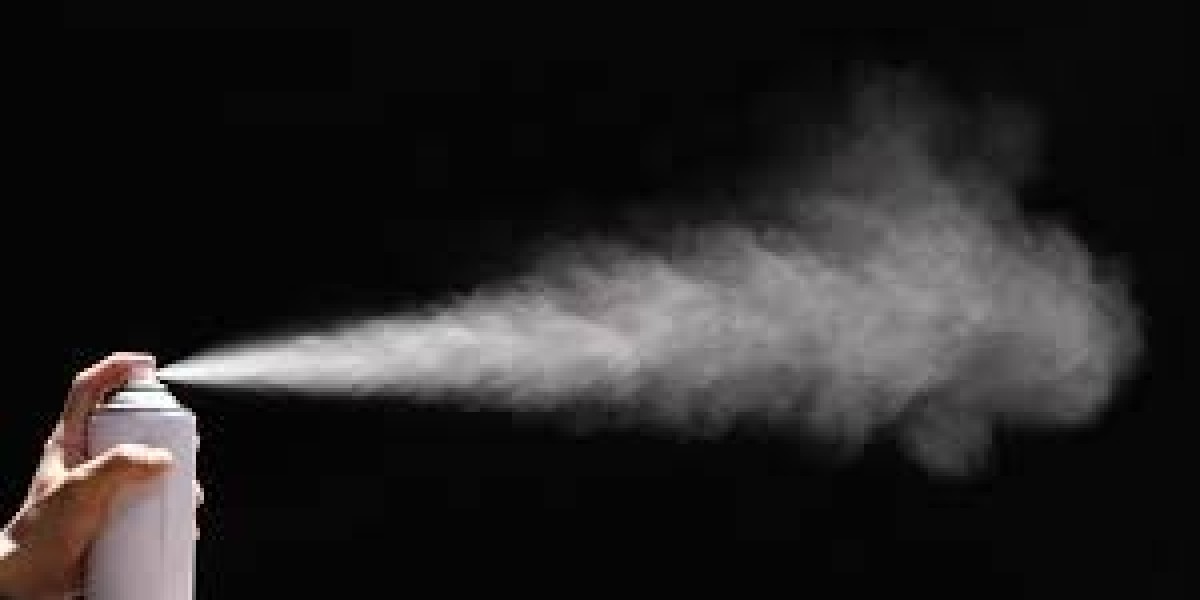

Walk through any home and you will find them without trying. Under the bathroom sink, on the laundry shelf, somewhere in the garage next to things that have not moved in months. The Aerosol Can is one of those objects so embedded in daily life that most people stop seeing it entirely. Personal care, cleaning products, cooking sprays, paint, insect repellent — the format appears across an almost comical range of applications. Understanding what it actually is, and more practically, how to store it without creating a problem, turns out to be more useful knowledge than it first appears.
The basic engineering is elegant in its simplicity. A sealed metal container holds both the product and a propellant under pressure. When the actuator is pressed, the valve opens, and the pressure difference between the inside and outside forces the contents out as a spray or foam or stream, depending on the nozzle design. The propellant — typically a liquefied or compressed gas — is doing double duty: it pressurises the contents and helps atomise them on the way out. Release the actuator and the valve closes, sealing everything back inside. That cycle repeats consistently across hundreds of uses, which is a large part of why the format proved so enduringly useful.
Steel and aluminium are the standard body materials, shaped and sealed to contain internal pressure safely across the conditions a container might normally encounter. Manufacturing standards are well established here. A properly made container handles normal use without drama. The complications arise when storage conditions drift outside what the design assumes, and they drift more often than people realise.
Heat is the variable that causes the most trouble. Internal pressure in a sealed aerosol rises as temperature increases, and there is a ceiling beyond which the container's safety features — which exist but are not meant to be regularly tested — become the last line of response rather than a backup. A closed car on a summer afternoon, a shelf directly above a radiator, a windowsill that catches full afternoon sun for several hours: none of these are safe storage environments for pressurised products, and yet all of them are common ones. The practical rule is straightforward: cool, stable temperature, away from anything that generates sustained heat. A utility room shelf, an interior cupboard, a shaded storage area. The garage works well enough in temperate weather but becomes unreliable if it heats significantly through summer.
Ventilation is a less obvious concern but a real one. A container in good condition, stored properly, should not be releasing anything. But valve connections wear over use, and a very slow trace release in an enclosed space behaves differently than the same trace in a ventilated area. Accumulated gas in a sealed cabinet is an unnecessary risk that a shelf in a well-aired space simply does not present.
Warehouse storage changes the scale of these considerations without changing the underlying logic. More containers means more accumulated risk from any single failure, so ventilation becomes non-negotiable, racking needs to keep containers upright and stable with airflow around them, and the separation between stored aerosols and any ignition sources — electrical equipment, heating systems, anything with a spark — needs to be deliberate rather than approximate. A clearly labelled dedicated storage area with temperature control and proper ventilation is the standard commercial approach for good reason.
In both settings, inspection before storage is a habit worth building. Dents, corrosion around the base, any visible damage near the valve or crimp — these are all reasons to retire a container rather than return it to a shelf and hope for the best. A compromised Aerosol Can does not signal its condition in advance. Bluefire manufactures pressurised products to consistent quality standards across its range. Everything available can be viewed at https://www.bluefirecans.com/product/ .