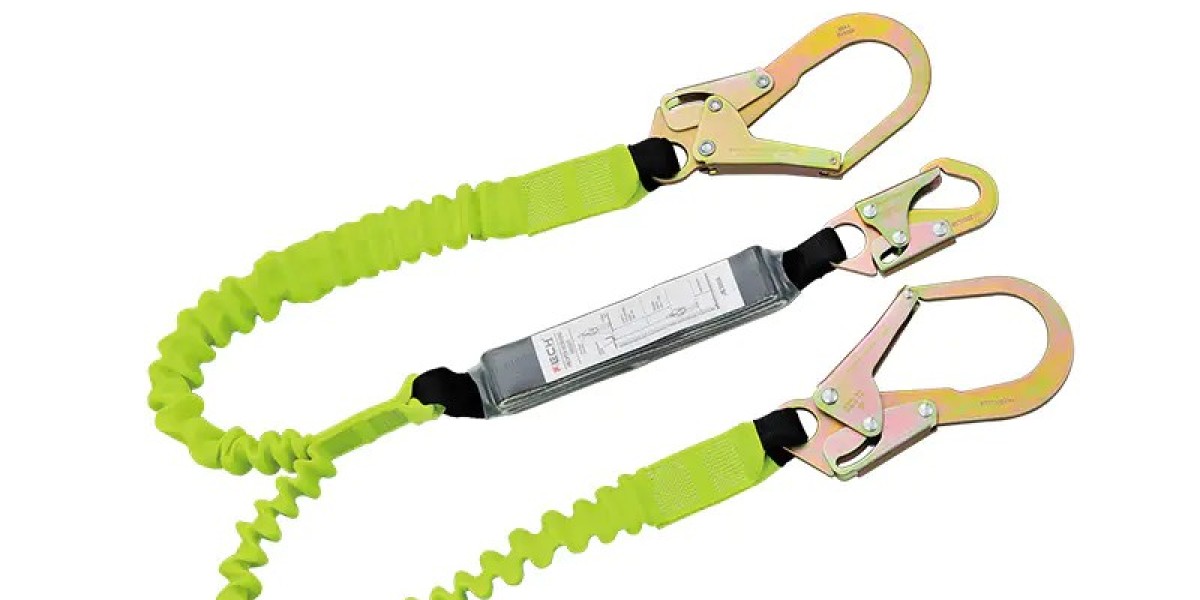

Work at height appears in many industries such as construction, telecom tower installation, equipment maintenance, and energy facilities. In these working environments, Safety Lanyards act as the connection between the worker and an anchoring structure through a harness system. Buyers searching online usually want practical information about materials, structural types, and sourcing channels like Wholesale Safety Lanyards.
1. Material structure used in Safety Lanyards
The material design of Safety Lanyards influences durability, flexibility, and adaptability to different worksites. Industrial lanyards are commonly produced using several rope or webbing structures.
Common manufacturing materials include:
Twisted polyester ropes are widely used in industrial gear due to their stable structure.
Kernmantel ropes are built with an internal load-bearing core and protective outer sheath.
Webbing lanyards are woven flat straps that are lightweight and easy to handle.
JECH manufactures Safety Lanyards using these materials so distributors can choose configurations suitable for different industries. Rope-based designs are often selected for rugged environments, while webbing styles appear in lighter equipment setups.
Buyers comparing Wholesale Safety Lanyards typically review these material options before selecting a product range.
2. Product series commonly seen in Safety Lanyards
Industrial Safety Lanyards are usually divided into several series based on structure and intended use. Factories often offer multiple categories so distributors can cover various job scenarios.
Typical product series include:
Single shock absorber lanyard – one connection line between harness and anchor.
Twin shock absorber lanyard – two connecting legs that allow movement between anchor points.
Work position restraint lanyard – designed to keep the worker within a defined working distance.
This product segmentation allows distributors to order Wholesale Safety Lanyards to cover multiple job types with one supplier.
3. Role of Safety Lanyards within height working systems
In height operations, Safety Lanyards function as a connecting component rather than a standalone product. They link the worker's harness to a fixed anchoring structure.
The harness distributes body load while the lanyard manages the connection distance and the fall-arrest function. Because of this design principle, Safety Lanyards are always used together with a harness during height work.
Procurement teams sourcing Wholesale Safety Lanyards often confirm compatibility with commonly used harness systems before placing orders.
4. What distributors review when sourcing Wholesale Safety Lanyards
Bulk purchasing decisions often involve several operational factors. Distributors evaluating Wholesale Safety Lanyards generally focus on:
Production capability, including the number of production lines.
Product variety, covering single, twin, and restraint models.
Material options include polyester rope, kernmantel rope, and webbing.
Stable batch production is useful for repeat purchasing cycles.
Manufacturers such as JECH supply Wholesale Safety Lanyards to international distributors and contractors who manage projects involving height operations.
Clear product structure and stable manufacturing capacity help distributors maintain consistent inventory when purchasing Safety Lanyards for ongoing industrial projects.