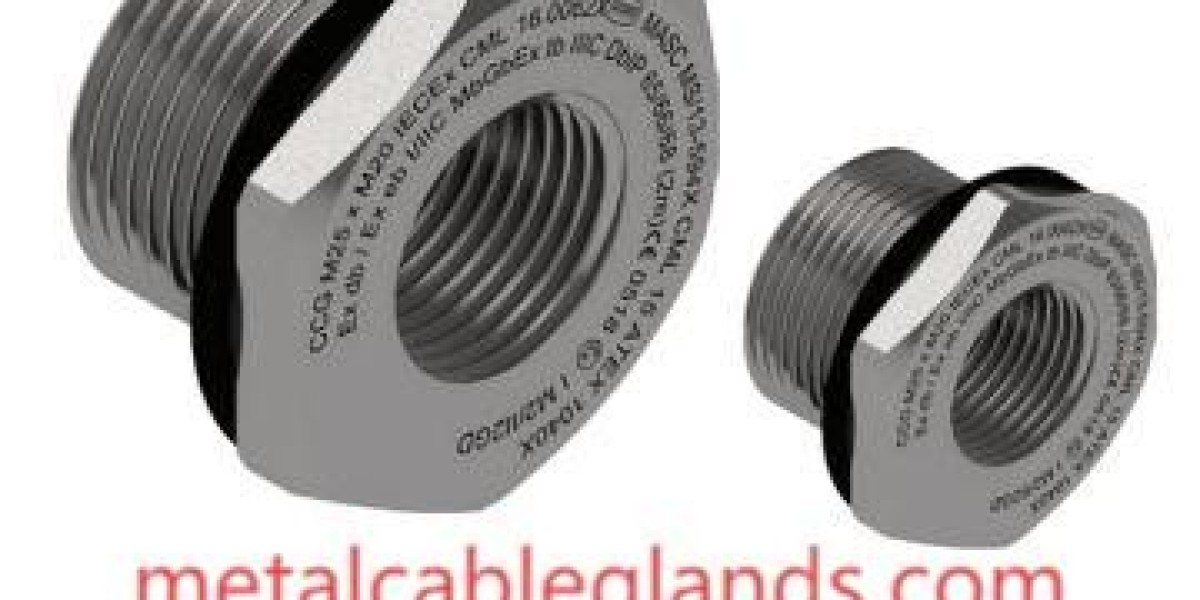

In complex cable management systems where different cable sizes and entry points must work together, the Cable Gland Reducer serves as a critical interface by enabling smooth transitions while maintaining structural consistency within electrical installations. Its role is often understated, yet its material composition directly influences reliability, compatibility, and long-term system stability.
The choice of material is fundamental to how a gland reducer performs in real-world applications. Reducers are designed to bridge differences between cable glands and enclosure openings, which requires materials that maintain form while supporting secure connections. Metallic and engineered materials are commonly selected for their ability to withstand mechanical interaction during installation and routine operation. The reducer must retain alignment and surface integrity even when connected components experience movement or adjustment.
Structural logic plays an equally important role. A well-designed reducer creates a continuous protective path rather than a weak transition point. Its geometry supports gradual adaptation between components, minimizing stress concentration at connection interfaces. This structural continuity helps protect cable sheathing and supports consistent sealing performance without relying on excessive force during assembly.
From a functional standpoint, material behavior directly affects installation efficiency. Reducers made from stable materials allow installers to achieve secure connections without repeated adjustment. This contributes to cleaner layouts and reduces the risk of misalignment that could compromise cable protection. In systems where multiple glands are used within confined spaces, material consistency helps maintain predictable assembly results.
Performance reliability is closely linked to how the reducer interacts with surrounding components. The interface between gland, reducer, and enclosure must remain stable over time. Material rigidity combined with controlled adaptability allows the reducer to maintain its role even when the system is exposed to vibration or routine maintenance activity. This balance ensures that the reducer does not become a point of degradation within the overall cable management system.
Application environments further highlight the importance of material selection. In industrial facilities, cable routing often intersects with machinery and structural elements. Reducers must support these installations by maintaining secure transitions without adding unnecessary complexity. In commercial and infrastructure projects, they contribute to orderly cable entry systems that support long-term maintenance and future expansion.
Zhejiang Hongjuesi Connector emphasizes integrated design principles where reducers are developed as part of a complete connection system rather than isolated components. By aligning material characteristics with compatible cable glands and enclosures, the reducer becomes a cohesive part of the protection strategy. This approach helps ensure that transitions remain reliable across varied installation scenarios.
System adaptability is another material-driven advantage. As cable layouts evolve, reducers allow systems to accommodate changes without replacing major components. This flexibility supports modern electrical planning practices that prioritize scalability and lifecycle efficiency. The reducer’s material stability ensures that such adjustments do not compromise protective continuity.
By combining thoughtful material selection with structurally sound design, the Cable Gland Reducer contributes to reliable cable transitions across diverse applications. For more information on compatible reducers, cable glands, and integrated connection solutions, visit https://www.metalcableglands.com/product, where Zhejiang Hongjuesi Connector shares application-focused expertise.