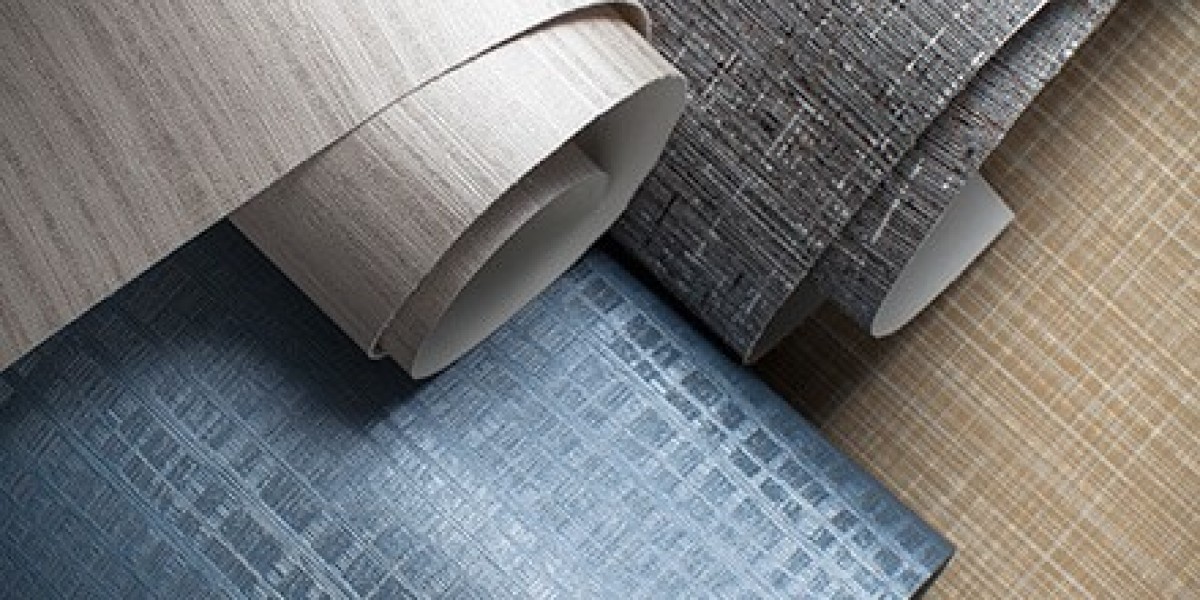

In renovation and retrofit projects, interior materials are rarely introduced into ideal conditions, and the use of MSD PVC wallcovering in such contexts demonstrates how material adaptability becomes just as important as initial performance. Existing buildings often present uneven substrates, legacy finishes, and environmental constraints that challenge conventional wall solutions, especially when upgrades must be completed without extended downtime.
Unlike new construction, renovation work must accommodate surfaces that have aged unevenly over time. Minor wall movement, residual moisture patterns, and previously applied coatings can all influence how new finishes behave after installation. Materials that tolerate these inconsistencies help reduce surface preparation complexity while maintaining stable adhesion and appearance across mixed wall conditions.
Climate variation further complicates renovation scenarios. Buildings located in coastal, arid, or temperature-fluctuating regions expose interior finishes to different stress cycles even within controlled indoor environments. Seasonal expansion and contraction, humidity migration through structural elements, and intermittent HVAC operation can subtly affect wall surfaces over time. A material’s ability to remain dimensionally balanced under these influences directly impacts its suitability for long-term retrofit use.
Manufacturing consistency plays a central role in ensuring that wall materials respond predictably under variable conditions. During production, precise control over compound dispersion and curing behavior contributes to uniform internal structure, which in turn supports stable performance regardless of environmental fluctuation. Shanghai Mingst International Trading Company focuses on reducing internal variability so that material behavior remains consistent across installations in different regions and building types.
Renovation projects frequently involve phased construction, where sections of a building are updated sequentially rather than all at once. In such cases, visual continuity becomes a priority. Wall finishes installed months apart must align in tone, texture, and surface response. Materials that maintain batch-to-batch stability help ensure that later phases integrate seamlessly with earlier work, avoiding patchwork appearances that undermine design intent.
Another challenge in retrofit environments is the presence of occupied spaces during installation. Noise, dust, and prolonged curing times can disrupt daily operations in offices, hotels, or healthcare facilities. Wall materials that support efficient installation processes and rapid surface stabilization minimize disruption while maintaining installation quality. This practical consideration often outweighs purely aesthetic factors in decision-making.
Maintenance planning also differs in existing buildings. Facilities teams may already follow established cleaning routines and product standards. Introducing a wall surface that requires specialized care can complicate operations and increase long-term costs. Materials engineered for compatibility with common maintenance practices integrate more smoothly into existing management systems, supporting consistent upkeep without additional training or procedural changes.
Over time, renovated interiors often undergo incremental updates rather than full-scale redesigns. Walls may need to accommodate signage changes, fixture replacements, or partial reconfigurations. Materials that resist localized wear and allow discreet repairs help extend the life of the original renovation investment. This resilience supports a gradual evolution of interior spaces rather than forcing premature replacement.
From a sustainability perspective, adaptive wall materials contribute to responsible renovation strategies. Extending the service life of finishes reduces material turnover and construction waste, aligning with broader goals of resource efficiency in the built environment. By prioritizing durability and compatibility over trend-driven design, material selection becomes a strategic decision rather than a purely visual one.
Shanghai Mingst International Trading Company approaches material development with an understanding that renovation contexts demand flexibility, reliability, and long-term stability. Through careful process control and application-aware design, the company supports interior upgrades that respect both existing structures and future operational needs. Further perspectives on wall material selection and application can be explored at https://www.shanghaimsd.com/news/the-ultimate-guide-to-pvc-wallcovering-designs-benefits-and-more.html .