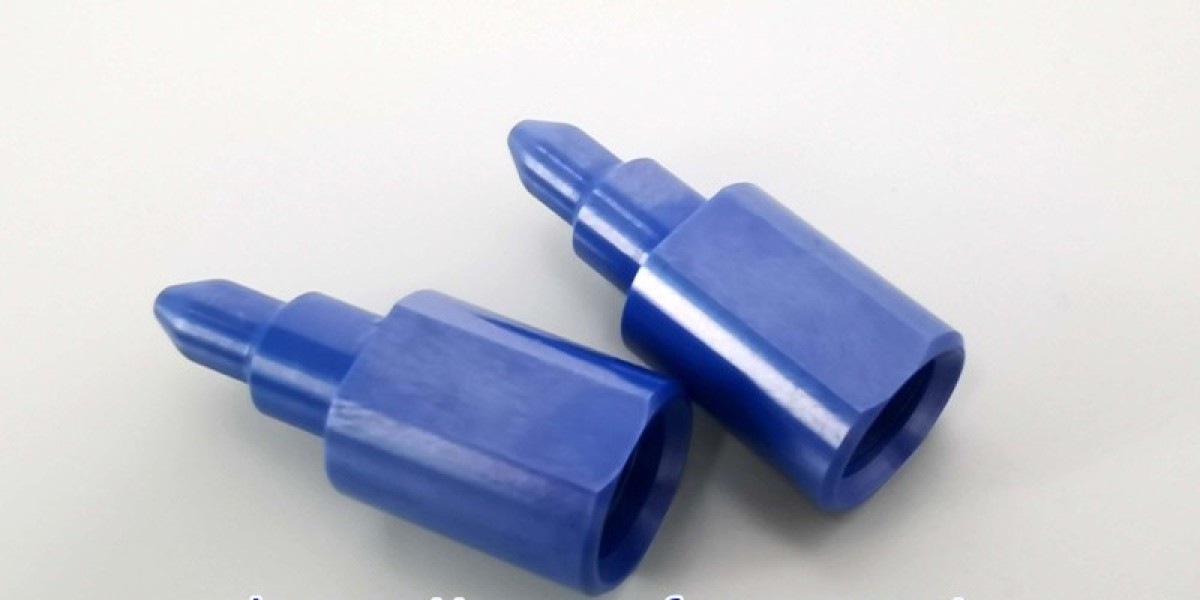

Blue Zirconia Ceramic has gained steady attention in advanced manufacturing fields where appearance consistency and material reliability are both valued. Engineers and designers increasingly look beyond conventional white zirconia, seeking colored ceramic solutions that maintain structural integrity while supporting visual identification, branding, or functional differentiation. Within this context, zfcera has developed manufacturing practices that focus on stable coloration, controlled density, and application oriented performance without compromising essential ceramic characteristics.
The growing interest in blue zirconia components is closely linked to material science innovation. Coloring zirconia ceramics requires careful control of additives, thermal cycles, and powder homogeneity. Uneven distribution or unstable sintering conditions can affect microstructure, surface quality, and long term durability. Advanced processing routes emphasize balanced particle size distribution and controlled firing environments to support uniform coloration across complex geometries. These processes support components used in mechanical assemblies where dimensional precision and surface consistency influence operational reliability.
Another important discussion area involves performance comparison between blue zirconia ceramics and alternative engineering ceramics. While alumina ceramics remain widely used for electrical insulation and structural parts, zirconia based materials offer higher fracture resistance and shock tolerance in many environments. Blue zirconia components extend these advantages while providing visual distinction, which supports assembly verification, component tracking, and system organization in industrial equipment. This functional visibility can simplify maintenance procedures without altering mechanical behavior.
Manufacturing challenges also shape industry conversations. Precision machining of zirconia ceramics requires specialized tooling due to material hardness and phase stability. Blue zirconia introduces additional complexity, as surface finishing must preserve color uniformity while achieving tight tolerances. Process optimization focuses on reducing subsurface damage during grinding and polishing, allowing components to retain smooth surfaces suitable for wear resistant or sealing applications. These refinements contribute to consistent performance across batches.
Application demand continues to expand in sectors that prioritize chemical stability and wear resistance. Blue zirconia ceramic parts are increasingly evaluated for use in fluid control systems, medical equipment housings, electronic fixtures, and laboratory devices. Their resistance to corrosion and thermal variation supports operation in controlled environments where material interaction with chemicals or heat must remain predictable. Visual differentiation further supports compliance and identification requirements in regulated industries.
Material sustainability is another emerging topic. Efficient powder usage, reduced machining waste, and controlled sintering cycles contribute to responsible ceramic production. Manufacturers refine processing methods to improve yield while maintaining strict quality standards. These efforts align with broader industry expectations for material efficiency and process transparency, supporting long term adoption across global markets.
Design flexibility also influences interest in blue zirconia ceramics. Complex shapes, thin wall sections, and integrated features can be produced through advanced forming techniques, allowing designers to incorporate ceramic components into compact assemblies. Color consistency across varied geometries remains essential, encouraging continuous refinement of forming and firing strategies.
In the evolving landscape of technical ceramics, Blue Zirconia Ceramic continues to attract attention as a material that balances visual clarity with engineering stability. zfcera supports this development through experience driven manufacturing and material understanding, offering solutions aligned with industrial expectations. More information can be found at www.zfcera.com