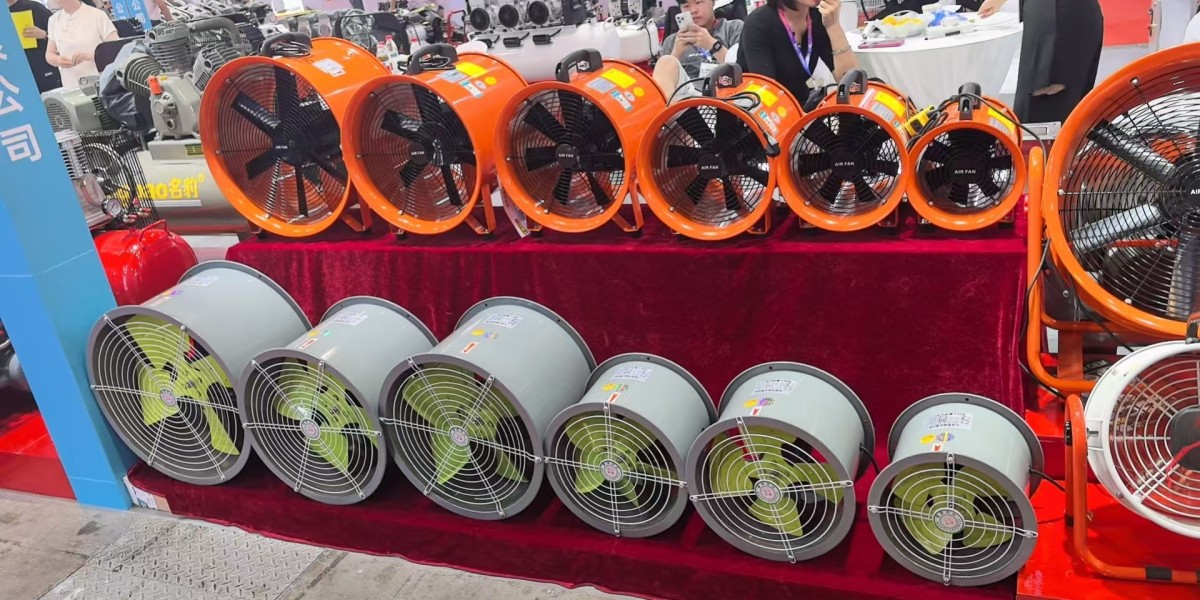

Axial fans play a significant role in industrial ventilation, cooling systems, and process air circulation. Their popularity comes from a straightforward airflow path, compact structure, and efficient movement of large air volumes at relatively low pressure. When evaluating axial fan solutions, airflow behavior, blade geometry, and internal guide structures are among the most important design considerations.
A high flow axial fan is commonly selected for environments where continuous air exchange is required, such as factories, warehouses, power equipment rooms, and HVAC systems. By optimizing blade pitch, hub ratio, and motor matching, this type of fan is capable of delivering stable airflow while maintaining smooth operation. Engineers often focus on balancing airflow output with energy consumption to ensure long-term operational stability.
In contrast, a vane axial flow fan incorporates guide vanes positioned either upstream or downstream of the impeller. These vanes help straighten the airflow, reducing turbulence and rotational losses. As a result, airflow becomes more uniform, which can improve system efficiency and reduce vibration. This design is especially suitable for ducted ventilation systems or installations where airflow direction control is important.
Material selection also affects performance. Aluminum alloy blades, reinforced plastic, and coated steel components are often chosen based on environmental factors such as humidity, dust, and operating temperature. Protective surface treatments can further extend service life in demanding conditions.
At Taizhou Haoba Electromechanical Co., Ltd., axial fan products are developed with attention to aerodynamic structure and manufacturing consistency. Each fan model is designed to match specific airflow and installation requirements, allowing customers to select suitable configurations for their projects.
By understanding airflow characteristics and structural design, users can make informed decisions when integrating axial fans into industrial or commercial ventilation systems.