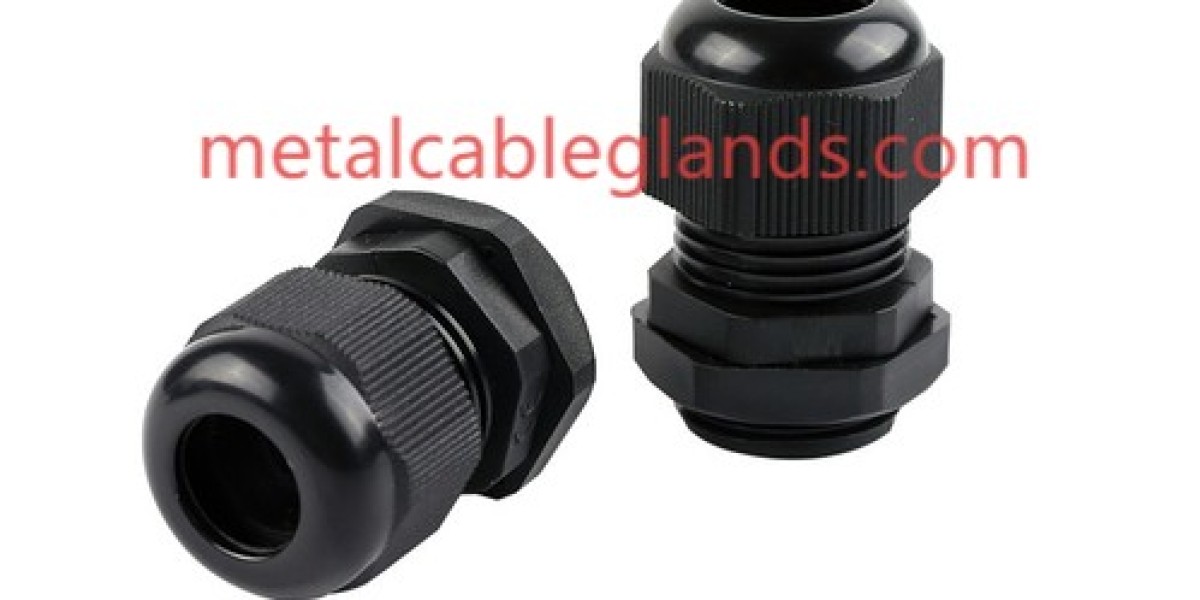

Every project manager knows the real cost of a cable gland is never the purchase price printed on the invoice; it is the sum of procurement, inventory, installation labor, rework, and twenty-five years of avoided outages. In both telecom infrastructure and utility-scale renewable plants, the Plastic Cable Gland has emerged as the single most effective lever for driving that total figure downward. Zhejiang Hongjuesi Connector built its reputation by obsessing over exactly these hidden costs and engineering them out of existence long before the product reaches site.
Start with procurement. A typical 5G macro site or 100 MW solar block traditionally required eight to twelve different metal gland specifications: separate parts for armored vs unarmored, different thread sizes for power vs fiber, and still more variants for hazardous-area certification. Hongjuesi’s universal-range Plastic Cable Gland collapses all of that into three core sizes that cover cable diameters from 3 mm to 35 mm regardless of armor type or voltage class. Purchasing departments report 60-70 % reduction in line items, fewer purchase orders, and almost zero risk of wrong-part delays that can hold up an entire container of equipment at the port.
Inventory carrying cost drops in parallel. Instead of pallets of rarely-used exotic sizes gathering dust (and eventually becoming obsolete), warehouses now stock only fast-moving universal SKUs with 18-24 month shelf rotation. One major European telecom contractor calculated that switching entirely to Hongjuesi plastic glands freed up €380,000 in tied-up capital across their regional depots while simultaneously eliminating 94 % of back-order events.
On-site labor tells an even more dramatic story. Because the glands arrive fully assembled with captive seals and color-coded diameter reducers already inserted for the most common cables, technicians no longer waste time hunting through bags of loose parts in driving rain. A 2024 audit of American solar EPCs showed that labor attributed to cable entry sealing fell from roughly 4.2 % of total electrical hours to under 1.1 %—a saving that often exceeds the entire material cost of the glands themselves over a 200 MW portfolio.
Rework and warranty claims represent the next frontier. Water ingress remains the number-one root cause of combiner-box failures in solar plants and the second-most common fault in outdoor telecom cabinets after lightning. Traditional grommets and low-end plastic glands lose elasticity after five to seven years of thermal cycling and UV bombardment, opening microscopic paths for moisture. Hongjuesi uses a proprietary long-chain polyamide 66 formulation with accelerated aging performance equivalent to 28 years in Dubai conditions (Q-Lab Xenon 1200 hours + 168 h salt spray + 2,000 thermal shock cycles). Insurance actuaries for several large renewable portfolios have quietly begun offering premium discounts for projects that specify these exact glands because historical claims data show failure rates below 0.04 % at the fifteen-year mark.
Energy loss is another invisible expense. Loose strain relief allows micro-movement that fatigues copper strands and increases resistance over time. The conical clamping design in Hongjuesi glands distributes force evenly around the cable circumference, maintaining less than 0.2 mΩ additional resistance even after IEC 62444 Category C vibration testing (30 g, 2,000 Hz). Across a 150 MW solar plant, that translates to several hundred thousand kilowatt-hours of recovered generation over the asset lifetime—often enough to pay for every gland on site multiple times over.
End-of-life cost is increasingly scrutinized as circular-economy regulations tighten. These halogen-free, RoHS-compliant plastic glands are 100 % recyclable as a single polymer stream with no metal inserts to separate, unlike brass or stainless equivalents. Several Scandinavian wind operators now mandate fully recyclable glands in tender documents specifically to avoid future decommissioning liabilities.
When private 5G networks are layered onto renewable plants for real-time performance analytics, the same glands protect both high-voltage DC strings and Cat6A data lines without forcing contractors to switch product families mid-project. The financial controllers see one part number, one negotiated price, and one proven reliability track record instead of fragmented supply chains.
In an industry where margins are measured in single-digit percentages and schedule slippage triggers liquidated damages, the humble cable gland has become serious money. Choosing a plastic solution engineered for the entire lifecycle—not just the day it leaves the factory—can be the difference between a project that merely survives its warranty period and one that delivers above-target returns for a full quarter century.Decision-makers who want to see the full cost-modelling whitepapers, lifecycle calculators, and bulk pricing tiers that have convinced some of the largest telecom and renewable players worldwide are invited to visit https://www.metalcableglands.com .