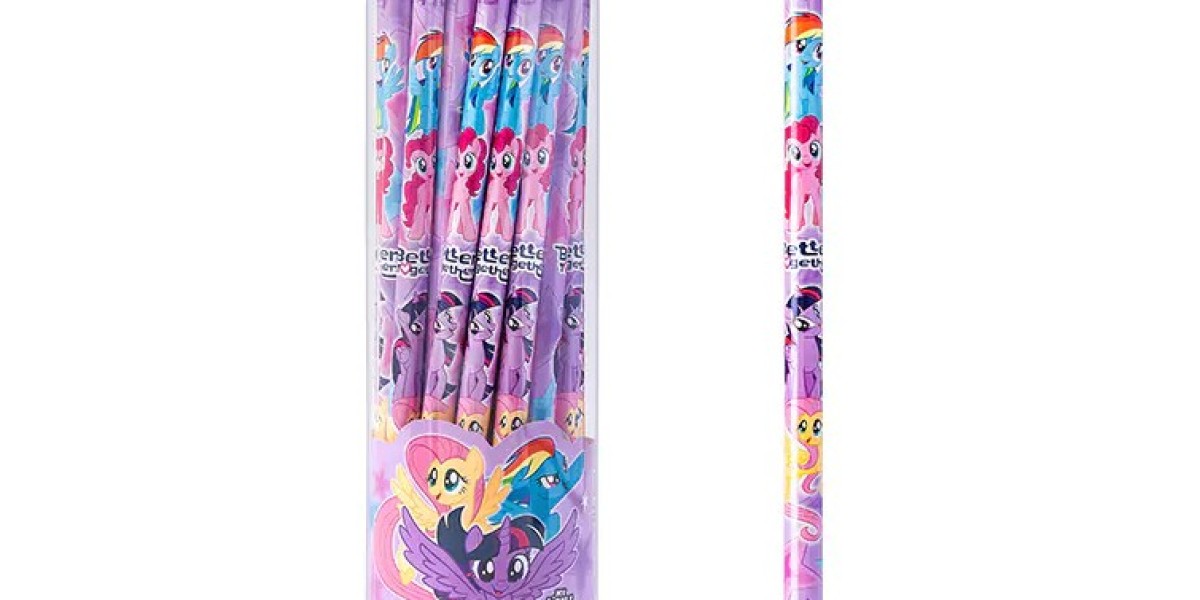

Few objects are as closely associated with the experience of learning as a school pencil. It sits in every pencil case, rolls across every desk, and leaves its mark on countless worksheets, sketchbooks, and examination papers throughout a student's education. Humble in appearance and modest in cost, the school pencil is nonetheless a carefully engineered tool whose material choices and manufacturing precision directly influence how comfortably and effectively young learners write and draw.
The graphite core is the functional heart of every school pencil. Contrary to widespread assumption, pencil cores contain no lead — they are composed of a mixture of graphite and clay, blended in proportions that determine the hardness and darkness of the resulting mark. The HB grade is the international standard for school pencils, sitting at the midpoint of the graphite scale between hard pale grades used in technical drafting and soft dark grades preferred for artistic shading. HB delivers a mark dark enough to read clearly on paper and light enough to erase cleanly without tearing the surface — a balance that suits the writing and drawing tasks students encounter across primary and secondary education.
Wood species selection matters considerably in school pencil manufacturing. Cedar — particularly incense cedar grown in sustainably managed forests — is the traditional preference for pencil casings because it sharpens cleanly and consistently without splintering, produces a pleasant natural scent during sharpening, and holds the graphite core centered within the barrel through the machining process. Basswood and poplar are used as alternatives in regions where cedar is less readily available, offering comparable sharpening behavior at a lower material cost. A school pencil whose casing splinters during sharpening frustrates young users and wastes usable pencil length — wood quality is a practical concern, not merely a manufacturing detail.